Saturday, July 10, 2010

ANDI SCORES - Nutrient Density Scale


This is a sample of the ANDI (nutient density scale). This scale shows the rankings of foods according to the nutrients they pack. The following nutrients are included in the evaluation: Calcium, Carotenoids: Beta Carotene, Alpha Carotene, Lutein & Zeaxanthin, Lycopene, Fiber, Folate, Glucosinolates, Iron, Magnesium, Niacin, Selenium, Vitamin B1 (Thiamin) Vitamin B2 (Riboflavin), Vitamin B6, Vitamin B12, Vitamin C, Vitamin E, Zinc, plus ORAC score X 2 (Oxygen Radical Absorbance Capacity is a method of measuring the antioxidant or radical scavenging capacity of foods).
Colorful plant foods contain a huge variety of protective compounds, mostly unnamed at this point. Only by eating an assortment of natural foods that are nutrient-rich, can we access these compounds and protect ourselves from the common diseases that afflict Americans and the out of control medical costs.
Keep in mind that nutrient density scoring is not the only factor that determines good health! For example, if we only ate foods with a high nutrient density score our diet would be too low in fat. So we have to pick some foods with lower nutrient density scores (but preferably the ones with the healthier fats) to include in our high nutrient diet. Additionally, if a thin person or highly physically active individual ate only the highest nutrient foods they would become so full from all of the fiber and nutrients that would keep them from meeting their caloric needs and they would eventually become too thin. This of course gives you a hint at the secret to permanent weight control.
If you want to read more info on this scale, go to the Whole Foods website. This is where I got most of this information from.
So now which of these vegetables can we grow in our gardens down in the deep south?
Kale, Collards, Spinach, Cabbage, Romaine, Broccoli, Cawliflower, Green Peppers, Carrots, Strawberries, Tomatoes, Blueberries, Oranges, Canteloupe, Kidney Beans, Sweet Potatoes, Sun Flower Seeds, Apples (only a few varieties: Dorsette Golden and Anna's Apple), Peaches, Green Peas, Cucumber, Corn, and Bananas

Tuesday, July 6, 2010

Fried Okra Recipe


Okra is a must have in a Southern garden. It is so hardy and thrives in our really hot weather. I only have 3 okra plants in my garden, and it has produced enough okra to eat 1-2 times a week!


Here is my favorite FRIED OKRA RECIPE:


1 lb. fresh okra, cut into 1/2 inch-thick slices

3/4 cup buttermilk (i use low fat - only 2 grams of fat per cup)

1 1/2 cups self-rising white cornmeal mix (next to the flour in the grocery)

1 tsp. salt

1 tsp. sugar

1/4 tsp. ground red pepper

canola oil


1. Stir together okra and buttermilk in a large bowl. Stir together cornmeal mix and next 3 ingredients in a separate large bowl. Remove okra from buttermilk, in batches, using a slotted spoon. Dredge in cornmeal mixture, use a slotted spoon and gently shake off excess.

2. Pour oil to depth of 1 inch into a large, deep skillet or dutch oven: med.- med. high heat. Fry okra, in batches, 4 minute or until golden, turning once. Drain on paper towels.

A Day's Harvest :)

Even though I have been battling with the stink bug issue, I've been pretty impressed with the amount of veggies we have gotten this year. So far, we have harvested (not including all the veggies still on the plants) a total of 35 tomatoes, 4 family meals of eggplant, 5 red peppers, 4 dozen jalapenos, 5 meals of okra, and 3 meals of green beans. The only ones I've been a little disappointed in have been the green beans. I though with as big as they have gotten that they would have produced more beans. I think my apple tree has started to shade that area of the garden a little more...so my guess is not enough sunlight.

This is what I harvested one morning about a week ago: eggplant, okra, green and purple beans, tomatoes, handful of blueberries, and several apples. :)

Tuesday, June 1, 2010

Garden Fresh Tomato Soup!!


Recipe for Garden Fresh Tomato Soup:

4 c. chopped tomatoes
2 cloves of garlic, chopped
half an onion, sliced
2 whole cloves (not garlic)
3 tbs. chopped fresh basil
2 cups chicken broth ( i use a little more)
2 tbs. butter
2 tbs. flour
1 tsp. kosher salt
1 tsp. fresh ground black pepper
1-2 tsp. sugar or to taste (takes away the bitterness of the tomatoes)
splash of milk (optional)

Saute onion and garlic in a little olive oil. Add chopped tomatoes and bring to a boil. Add stock. 20 min. Add chopped basil and remove from heat. Run through a food mill ( I used a food processor in batches).
In the now empty stockpot, melt the butter over med. heat. Stir in the flour to make a roux, cooking until the roux is a medium brown. Gradually whisk in a bit of the tomato mixture, so that no lumps form, then stir the rest. I add a splash of milk. It gives it the creamy "look" with out all of the fat from using cream. Season with sugar, salt, and fresh pepper and adjust to taste. Can sprinkle with a little Parmesan if desired too. :)

How to keep the birds off of the tomatoes!


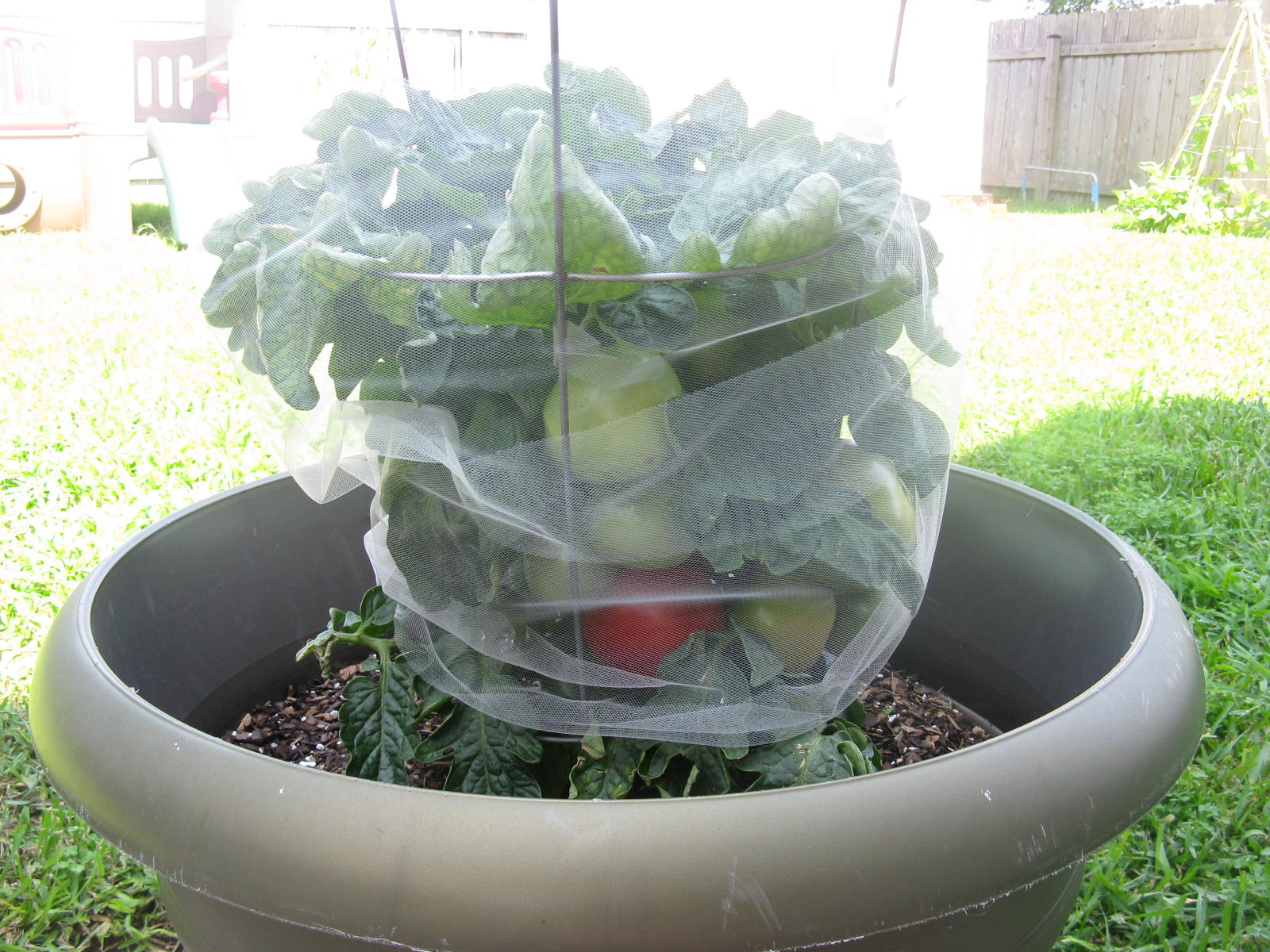
There is nothing more aggravating than to walk outside and see your tomatoes half eaten by the birds!! I have finally figured out a way to keep them off. You can fork out the money and buy some bird netting to lay over your plants.
I found a cheaper, more effective way to keep them off. I went to Michael's and bought some "tulle" used to decorate for weddings etc. I wrapped it around my plants when they looked like they were about to turn red and ripen. The plant can breathe and get sunlight through it as well. I also put up a bird feeder on the other side of my yard to make sure they are eating the seeds instead of my veggies. Working so far! :)

Updates from the Garden! June 2010

These sweet peppers are the biggest ones I've ever grown! They start out green and ripen red. I can't wait to cook with these :)


Green Beans!! I have a bowl full of beans and many more to come off of these plants!


Eggplants!!!


The jalepeno peppers are growing like crazy! I have dozens more still left on my plants! Justin made some roasted jalepeno cheese poppers with these for Memorial Day.


Stretching the Dollar and Saving the Seeds! June 2010


My goal for this year is to save as many seeds as possible from this year's production. I began vegetable gardening a few years back not to save money but because i enjoyed it. A friend asked me several weeks ago, "Are you actually saving a lot of money by growing your own veggies?". At the time my answer was, "A little bit."

I decided at that moment that was going to be my goal for this year! In the past I would spend a good bit of money on buying rich soil, buying the seeds or plants, and organic natural insecticides. I now have my own compost so I'm hoping that I won't have to buy anymore soil. To stretch the dollar even further, I started saving seeds from the plants to use for next year's harvest.

How do you save the seeds?

If your herbs are seasonal (meaning they don't last all year due to temperature variances), they should flower before they die off. At this point, don't pull up the plant. Wait until the flowers look like they are dying. When the flowers look dead and dry, pick them off. If you pull the dry, dead leaves apart you should be able to find several little seeds inside each flower. If they are really dry all you should have to do is give the flower a shake and the seeds should fall out into your hand. Store them in an envelope or a brown paper lunch bag and label it. The next time spring or fall rolls around you can plant the seeds.

If you plan on saving seeds from produce, simply open the fruit or veggies and take out the seeds. Put the seeds on a paper towel on your counter for a few days to let them dry out. Once completely dried, you can store them as you would the herb seeds. I bought an orange flesh melon (kind of a mix bt a cantaloupe and a honey dew melon) from Whole Foods last year. I scraped the seeds out and saved them. The boys planted them a few weeks ago, and the plants are looking great!


In this picture, the big flower on the right is from my dill plant which is about to die off. If you look closely you can see the brown seeds :)